A race isn't a simple as it seems
From the side of the road, a bike race can seem a blurring rush of colour and speed, of a bunch of riders just trying to beat each other to the line over a set course. In reality its far more complicated that that. Here we’re going to try and explain what is actually developing in front of you.
Before the start
Every rider has a racing licence which they attain by scoring points in other races. This then sets the level of events they can enter to ensure they are riding with others of a similar ability. The Tour of the Reservoir is designed as a National A status of which riders who have achieved Elite, 1st and 2nd class are allowed to enter. The highest level of racing in Britain apart from International events.
Every riders clothing and bike has to conform to the Technical Regulations of British Cycling and therefore to the UCI, the world governing body based in Switzerland. Today’s bikes are complicated machines of which all components and the frame itself have to be approved for general sale. Everything they use has to be available for open sale to everyone. Even you! – if you can afford it!
The frame of nearly all the bikes you see today will be of carbon fibre but thats not where the technology ends. Gear mechanisms are electronically controlled by buttons on the brake levers, some linked by bluetooth while others have a thin wire rather than a traditional cable.
All riders are supplied with a timing chip which is attached to the front fork of their bike which triggers at timing mat when they cross the finish line. This allows us to formulate the results of everyone finishing and their time. You will also see Judges manually recording the positions themselves – just in case!
How much fluid and nutrition a rider starts with depends very much on the individual and if they are part of a team that is supported. Ideally this will only be enough to see them through to the first feed station after 20km.
Neutralised Zone
A race doesn’t start straight away. From the time it leaves the race HQ, it has a section where the field rides at a leisurely pace to a predetermined point. This is called the Neutralised Zone where the speed is limited to around 20 mph by Comm 2 who takes up a position in front of the riders. This is to ensure they are warmed up and everyone, including all official vehicles are in the correct order. A race usually starts at a point called ‘Kilometre Zero’ or the true staring point of the race. If any rider has had a mechanical problem for instance and is lagging behind the main peloton, the start will be delayed until they regain contact.
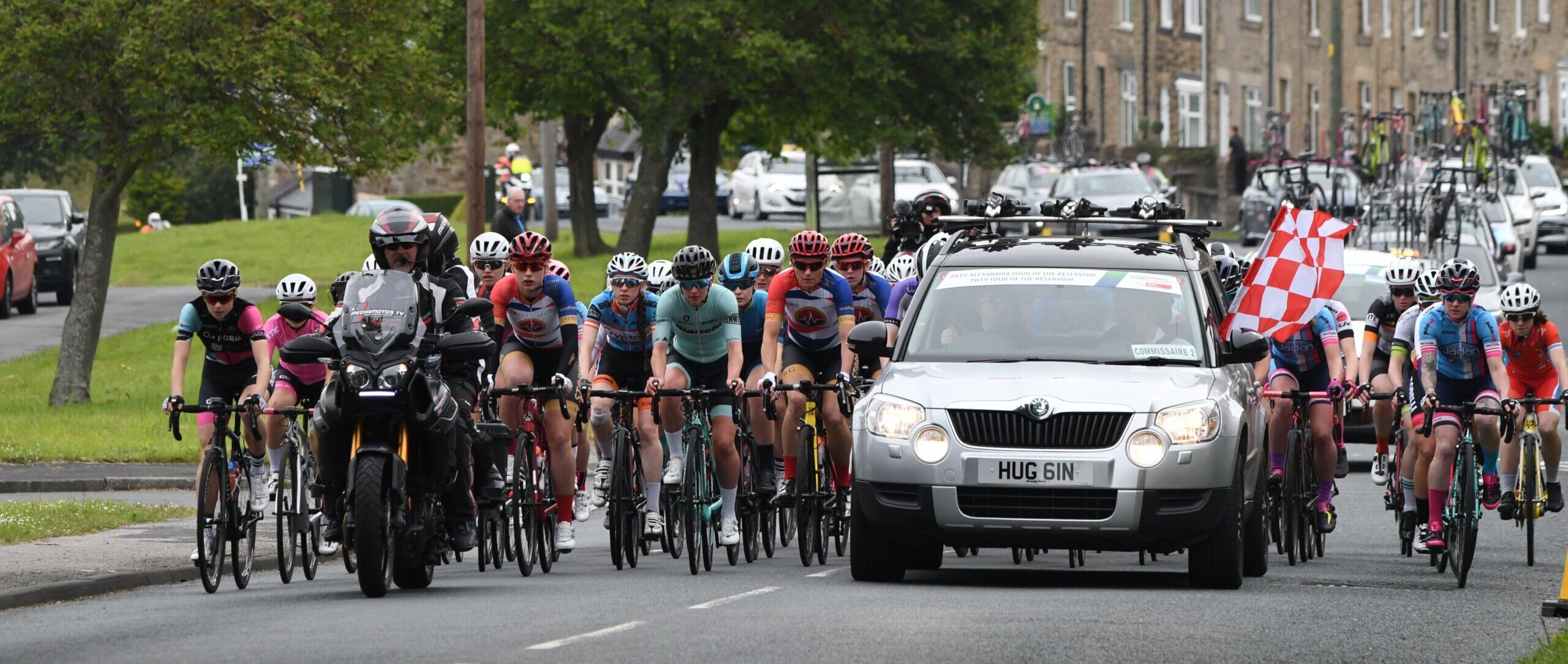
Are we OK to go?
Over race radio this call will be heard. Commissaire 2 then ask the Chief Commissaire, who is positioned behind the riders but ahead of the rest of the race convoy, if the flag they are waving, either a Union Jack or red and white chequered can be pulled in and the car will speed ahead, a signal to the riders that racing has started.
In the case of the Tour of the Reservoir, the neutralised section is relatively long, 6.2km which is to minimise disruption to the residents through Moorside and means racing starts soon after we cross the A68 and out of Castleside at the junction on Healyfield Lane. Then the action starts!
A race within a race?
Once the flag has been dropped and the event is underway, communications play a major part. The race has 2 radio frequencies which will be used throughout the event. One is called ‘Radio Tour’ and is a ‘listen only’ channel to give the convoy time checks and details of who is in a group. The other frequency is the Commissaries channel to link officials and team managers to inform them if their riders require assistance if they have punctured for example. The Comms radio channel is also linked to the Police radio frequency from which the Police Command vehicle may offer information regarding such authorisation such as the length of the race ‘bubble’ or the rolling road closure.
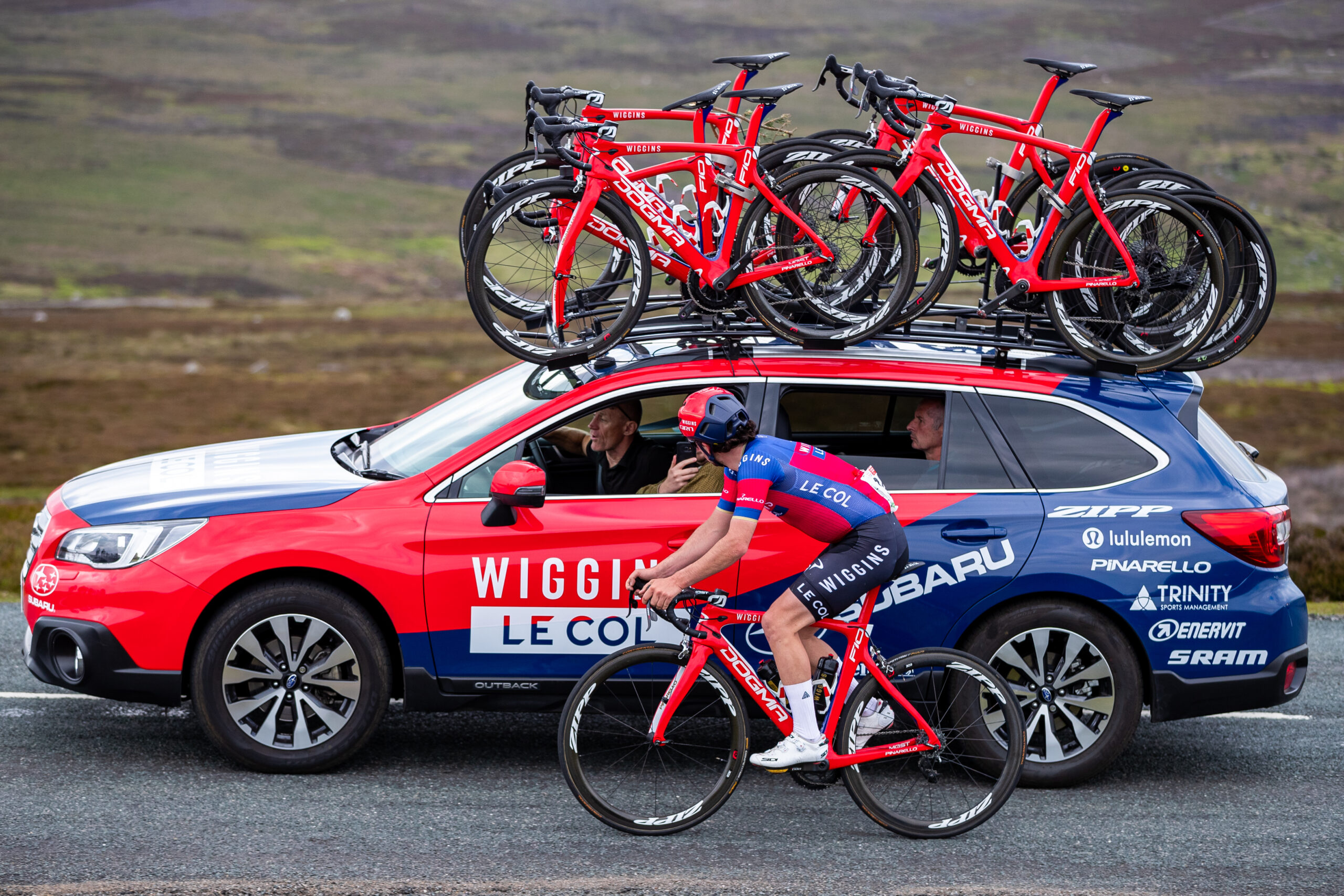
Depending on the dynamics of the racing from now on you will see a constant rearranging of the race convoy as team cars are called up to service their riders usually with drinks, which they can also do from designated Feed Stations, but also from the moving team car. After they’ve done that they must retain their position in the convoy of the rest of the team cars, an order which is decided before the race. Riders may also want to speak to their Team Manager to ask instructions. Radio communications between riders and managers isn’t allowed in the UK as it is on big races you may have seen on TNT on the continent.
Commissaires are also busy throughout the event as they work out if the gaps between riders are sufficient for themselves to get into to see which riders are present as well as time checks back to the rest of the peloton, a process they will constantly repeat to the finish. At times you will see the Moto Comms come into play. These are linked to the rest of the officials cars but obviously being on a motorbike, they can get into gaps a car cannot. At this point Team Managers will ask if they can move up and take up a position behind their riders to save time in case they have problems.
Approaching the finish you’ll see the team cars deviate off the route as they swing off just before the finish line as they aren’t permitted to follow the riders across the finish line. Once the lead riders have completed the course, the official timekeepers work with the Photo-Finish operators to determine the result after which the result is handed over to the organiser who will present the top 3 with their podium prizes after which everyone apart from Photographers run for cover in case they get covered in foam from the winners bubbly!
At this point everyone can take a well earned breather, especially the organisation for who work never stops throughout the entire day. Licences are handed back to riders and timing chips to the organisers and everyone tells each other what a grand job they have done and promise to return next year!